The short answer
- Cairns for the reef, the Whitsundays for the islands. That's the honest one-line answer.
- Cairns' outer reef is about 50 km offshore: 1.5 to 2 hours by boat.
- The Whitsundays' outer reef is 105 km out: around 3 hours each way.
- Most Whitsundays snorkelling is fringing reef around the islands, where visibility varies from 3 to 20 m.
- Whitehaven Beach has no equivalent in Cairns. If that's the picture in your head, go there.
We're a Cairns business, so treat our conclusion with appropriate scepticism and look at the numbers instead. They're the reason we'd give the same answer if we worked in Airlie Beach: these two destinations are sold as the same thing and they aren't.
The short comparison
| Cairns | The Whitsundays | |
|---|---|---|
| Distance to outer reef | ~50 km | ~105 km from Airlie Beach |
| Boat time to outer reef | 1.5–2 hours | About 3 hours |
| What most tours snorkel | Outer reef bommies and coral gardens | Fringing reef around the islands |
| Typical visibility | Generally good on outer reef sites | 3–20 m, varying with tide and runoff |
| Operators | The largest fleet on the coast | Fewer, and sailing-led |
| Signature beach | None in the city; islands and northern beaches | Whitehaven Beach |
| Rainforest | Two World Heritage areas meet here | None |
| Best for | Reef, diving, rainforest, variety | Sailing, islands, beaches |
Distances and boat times as commonly published for each destination.
Quick picks
We're based in Cairns, so read this knowing that: the numbers below are the reason, not the marketing.
- If the reef is the pointCairns, closer outer reef, more operatorsCompare reef tours →
- If you also want rainforestCairns, the Whitsundays have noneRainforest tours →
- If diving is the pointCairns, and stay on a liveaboardSee the liveaboard →
On this page
Distance to the outer reef: the number that decides it
This is the substantive difference and it's not close. The outer Great Barrier Reef sits about 50 kilometres off Cairns and about 105 kilometres off Airlie Beach.
Doubling the distance changes the product entirely. From Cairns, the outer reef is a 1.5 to 2 hour crossing, which leaves the middle of the day for two or three moorings. From Airlie Beach it's around three hours each way, which is six hours of travel in a day, so most Whitsundays operators reasonably don't go there, and sell island snorkelling instead.
Our guide to how far the reef is from Cairns breaks the crossing down boat by boat, and it explains why an extra 45 minutes each way matters so much.
What you swim over
Here's the part the brochures blur. Both destinations are inside the Great Barrier Reef Marine Park, so both can legitimately say "the Great Barrier Reef". What you swim over is different.
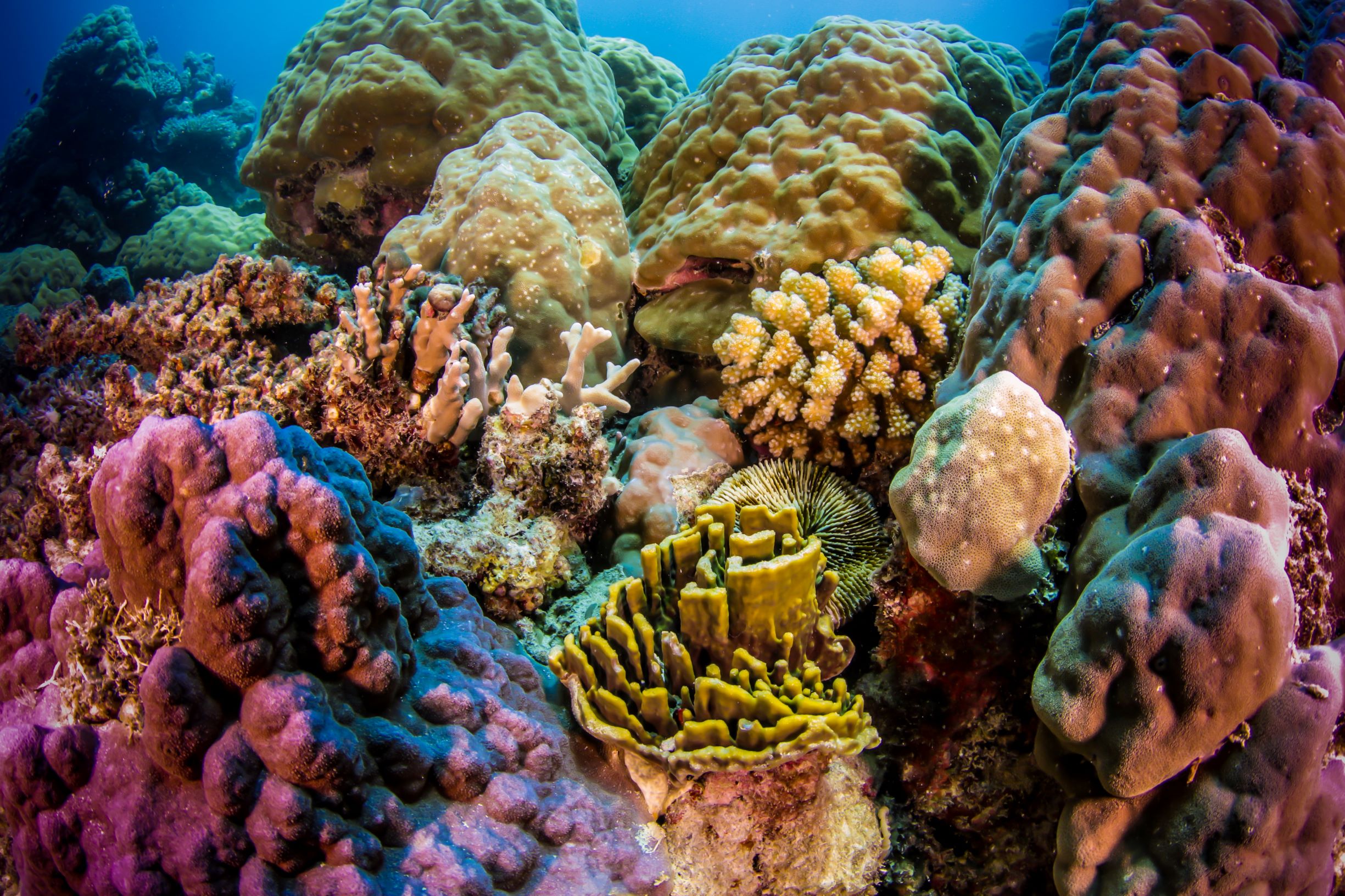
From Cairns: outer reef sites, Flynn, Milln, Thetford, Saxon, Hastings, Norman, Moore, Upolu. Deep water, coral bommies, walls and swim-throughs, with generally reliable visibility because there's little river influence 50 km out.
From Airlie Beach: mostly fringing reef around the Whitsunday islands. That's shallow, sheltered, easy snorkelling, genuinely pleasant and good for nervous swimmers, but visibility is regularly affected by tidal movement, island runoff, rivers and wind, and commonly quoted at anywhere from 3 to 20 metres.
If someone shows you a photo of coral bommies dropping into deep blue water, that's outer reef. If they show you turquoise shallows off a white beach, that's the Whitsundays. Both are lovely. They're not interchangeable.
Beaches, and the Whitehaven question
Being fair about the other side of the ledger: the Whitsundays win on beaches, comprehensively.
Whitehaven Beach is seven kilometres of silica sand and there is nothing like it in the Cairns region. If the image in your head is a white beach and a boat, go to the Whitsundays and don't let anyone talk you out of it.
Cairns has no city beach at all, the foreshore is a tidal mudflat, and the answer is the free Esplanade Lagoon. What it does have is eight northern beaches within half an hour, all with netted enclosures in stinger season, and island beaches at Green Island and Fitzroy Island with reef straight off the sand. Good, and not Whitehaven. See our northern beaches guide and island tours.
What else is within reach
This is where Cairns pulls ahead again, and it's about more than the reef.
- Two World Heritage areas meet at Cape Tribulation: the Wet Tropics rainforest runs down to the sand and the reef starts offshore. Nowhere else on earth does that. See how to visit the Daintree.
- The Atherton Tablelands: crater lakes, waterfalls, platypus, an hour inland. See our Tablelands guide.
- Kuranda: a heritage railway and a 7.5 km cableway over the canopy.
- White-water rafting, ballooning, skydiving, canyoning: all within an hour or two.
The Whitsundays' land-based offering is thinner: it's a sailing and island destination, and it's excellent at that. If you want a week with reef, rainforest and mountains in it, that's Cairns. Our day trips guide lists the lot.
For divers
Cairns, clearly, and for three reasons: the outer reef is closer, the fleet is bigger so there's more genuine dive-led capacity, and the liveaboards go north to the Ribbon Reefs and the Cod Hole, which is a different standard of diving again.
Silverswift at $308 visits three outer reef sites in a day, which is unusual for a day trip. For more than three dives, a liveaboard stops you paying for the crossing every morning. Full picture in our diving guide.
If you're doing both on one trip: they're about 1,000 km apart, so it's a flight rather than a drive. Give the Whitsundays two or three nights on a boat, and give Cairns four or five days for the reef and the rainforest. Doing either as a two-night stop is a waste of the airfare.
Who should go where
Go to Cairns if the reef is the reason for the trip
Closer outer reef, a shorter crossing, more boats at more price points, and the option of two or three sites in a day.
Go to Cairns if you want variety
Reef, rainforest, waterfalls, a cableway and an adventure industry, all inside two hours. A week here fills itself.
Go to Cairns if you're a diver, or want to learn
The fleet, the sites and the liveaboards are all better. Cairns is one of the cheapest places in the world to certify.
Go to the Whitsundays if you want the beach photograph
Whitehaven is genuinely world-class and Cairns has no answer to it.
Go to the Whitsundays if you want to sail
Multi-day sailing between islands is what that destination is built around, and it's very good at it.
Go to the Whitsundays with nervous snorkellers
Shallow, sheltered fringing reef off a beach is less confronting than a ladder into 20 metres of water 50 km offshore. Though a Cairns pontoon solves the same problem, see the reef for non-swimmers.
Coming to Cairns for the reef?
Compare every outer reef boat side by side, crossing times, number of sites, passenger numbers and what's included.
Compare reef tours →How we know this
We're a Cairns business and we've tried to make this comparison on numbers rather than loyalty, which is why the Whitsundays win the sections they win. Distances and crossing times are the commonly published figures for each destination, and the visibility range for Whitsunday fringing reef is as quoted by operators there.
Conditions vary at both destinations. Visibility on any given day depends on wind, tide and recent rain.
Cairns or the Whitsundays: our verdict
Cairns if the reef is the point. The outer reef is about 50 km out against 105 km from Airlie Beach, which is a 1.5 to 2 hour crossing against roughly three, and that single number is why most Whitsundays tours snorkel island fringing reef instead. The Whitsundays if the beach is the point, because Whitehaven has no equivalent here, or if you want to sail between islands for a few days. For diving, rainforest and variety, it's Cairns.