The short answer
- Best overall: late August to October, calm seas, warm water, no stingers, reliable sun.
- Best for the Great Barrier Reef: the dry season, June to October, for the flattest crossings and clearest water.
- Best for waterfalls and rainforest: February to May, when everything is thundering.
- Busiest and priciest: July and the Australian school holidays. Book well ahead.
- Riskiest: January to March, the wettest months, inside cyclone season.
Cairns doesn't really have four seasons. It has two: the dry and the wet. Which one you land in changes almost everything about your trip, how the reef looks from a boat, whether you can swim off a beach without a stinger suit, and how hard the waterfalls are running.
There isn't a bad month to visit Far North Queensland, but there are definitely better ones depending on what you came for. Here's how the year plays out, from people who live through it.
Dry season vs wet season in Cairns
Dry season: May to October
This is the postcard version of tropical north Queensland. Days sit around 24–28°C, humidity drops, rain is occasional rather than daily, and the southeast trade winds keep things fresh. Reef crossings are at their calmest and underwater visibility is at its best. It's also stinger-free, so you can swim off the beaches without a suit.
The trade-off is company: this is peak season, and July in particular books out.
Wet season: November to April
Hot, humid and green. Expect 28–32°C days, sticky nights, and rain that tends to arrive in heavy afternoon bursts rather than all-day drizzle. The rainforest is at its most alive, waterfalls are enormous, and the crowds thin right out.
Two things to plan around: stinger season runs roughly November to May, so you'll wear a lycra suit on reef trips (operators provide them), and this is the cyclone window, which occasionally disrupts boats for a day or two.
Quick picks
The best window depends on what you came for.
- Best month overallSeptember, calm, warm, stinger-freeSee reef tours →
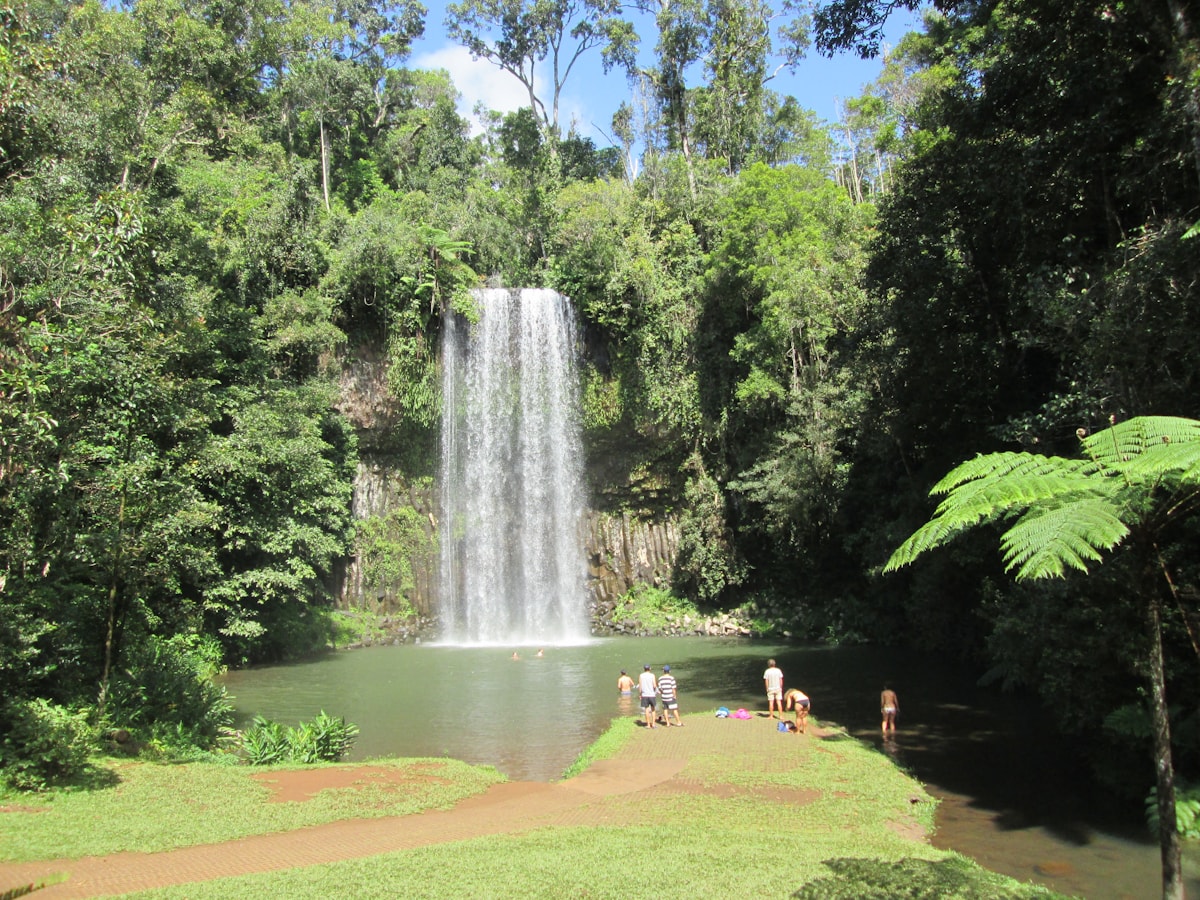
- Best for waterfallsFebruary to May, falls at full powerSee rainforest tours →
- Best value monthsLate January to March, and NovemberSee packages →
On this page
Cairns weather month by month
A realistic month-by-month view of what to expect, and what each month is best for.
| Month | Weather | Reef & sea | Crowds | Verdict |
|---|---|---|---|---|
| January | Hot, humid, wettest stretch | Stinger suits; can be choppy | Quiet after New Year | Cheap and green, least reliable |
| February | Peak wet, 24–32°C | Warm water ~29°C, variable | Very quiet | Best for waterfalls, worst for certainty |
| March | Still wet, easing late | Warm, occasional swell | Quiet | Improving; good value |
| April | Drying out, lush | Settling down | Easter spike | Underrated, green but drying |
| May | Dry begins, 20–28°C | Calming, clearing | Building | Excellent all-rounder |
| June | Dry, cooler nights | Calm, clear; minke whales offshore | Busy from mid-month | Great reef month |
| July | Coolest, driest | Best visibility; breezier | Peak, school holidays | Superb weather, most people |
| August | Dry, sunny, trade winds | Clear; wind can bump up seas | Busy | Very good; watch the wind |
| September | Warming, dry, calm | Calm and clear, warming water | Easing | Our pick of the year |
| October | Warm, calm, humidity rising | Warm, flat, stinger-free | Moderate | Excellent, just before the wet |
| November | Hot, humid building | Stinger season starts; coral spawning | Quieter | Good value, warm water |
| December | Hot, wet arriving | Warm, variable | Christmas spike | Festive but humid |
Typical patterns, not guarantees. Far North Queensland weather is local and changeable, and a single forecast can shift a reef day.
The best time to visit the Great Barrier Reef
If the reef is the reason you're coming, aim for the dry season and ideally September or October. You get calm crossings, water around 26–27°C, good visibility and no stinger suit.
June to August is also excellent for visibility, but two things catch people out. The trade winds are at their strongest, so a flat morning can turn into a bumpy afternoon crossing. And the water is cooler, around 23–24°C, cool enough that a wetsuit makes a long snorkel far more comfortable.
One bonus for divers: dwarf minke whales pass the northern reefs in June and July, which is a genuine reason to pick those months if you're doing a liveaboard.
Does the season change what you'll see?
Less than people expect. Coral and fish are there year-round. What the season really changes is comfort and visibility, how flat the ride out is, how clear the water is, and whether you're in a stinger suit. If you're prone to seasickness, picking a dry-season month matters more than any other decision you'll make.
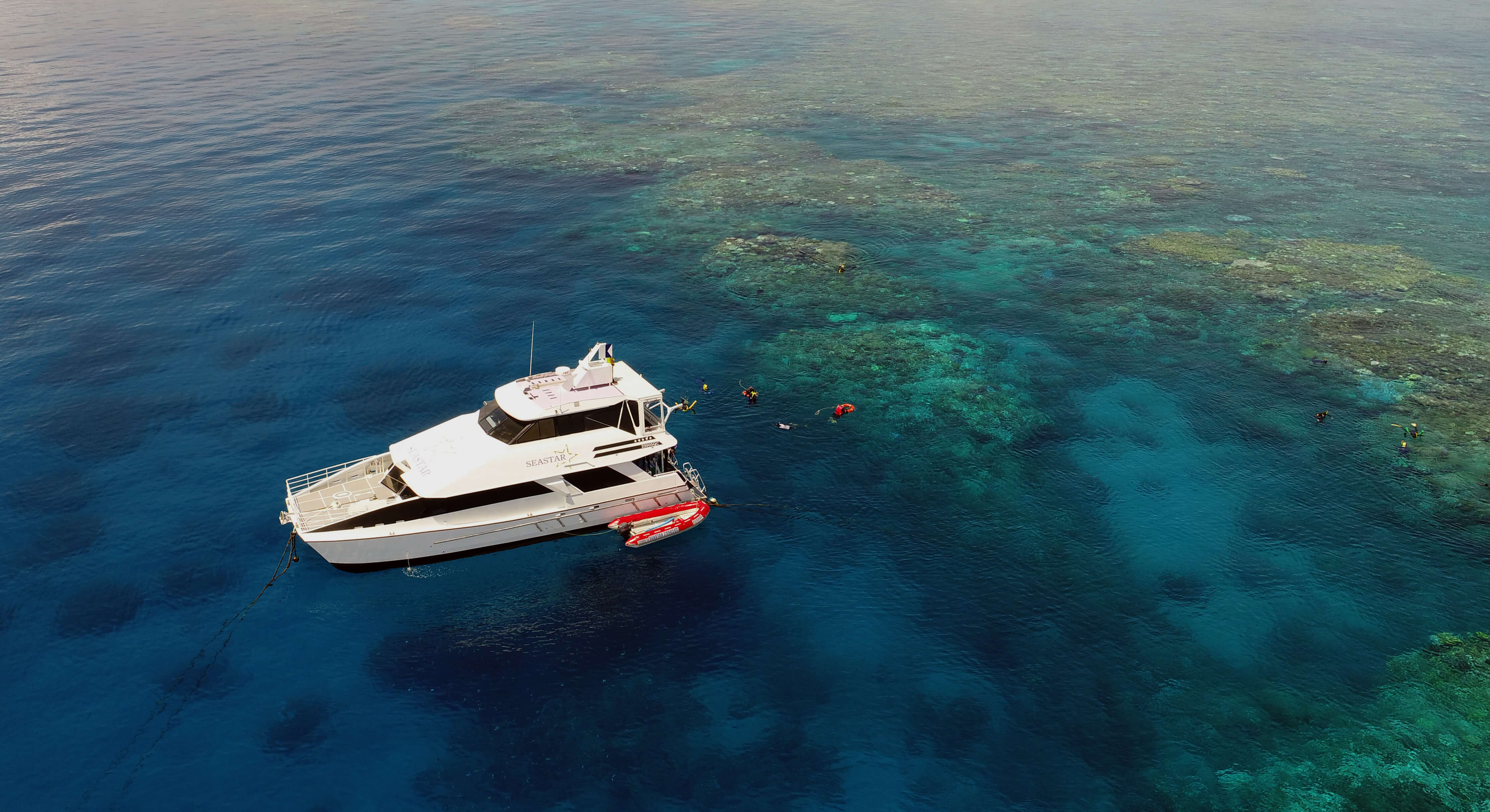
Planning your reef day around the weather?
Compare the boats by crossing time and shelter, so you can pick one that suits the forecast, not just the price.
Compare reef tours →Stinger season in Cairns, honestly
Stinger season runs roughly November to May, when box jellyfish and irukandji are present in coastal waters. It sounds alarming and it's worth taking seriously, but it's also very manageable.
- Reef operators provide full lycra stinger suits and everyone wears them. It's routine, not a warning sign.
- Cairns beaches have netted swimming enclosures, and the Esplanade Lagoon in town is always safe.
- Out on the outer reef, 40–70 km offshore, the risk is far lower than at coastal beaches.
- It does not stop reef tours running. Boats operate all year.
In short: stinger season changes what you wear, not whether you go.
Best time for the Daintree, Kuranda and the waterfalls
Flip the advice. The Daintree, Atherton Tablelands and the waterfall circuit are at their absolute best February to May, when the falls are full and the rainforest is dripping and dense. Millaa Millaa in April is a different thing entirely from Millaa Millaa in September.
Rainforest days also work as wet-season insurance. If the forecast rules out a reef day, a Daintree or waterfalls day barely cares about rain, arguably it improves it. The Kuranda rail and cableway day is another good wet-weather fallback.
When is Cairns busiest, and cheapest?
Peak is June to October, with July the sharpest point because it collides with Australian school holidays. Easter and the Christmas–New Year window are the other two spikes.
If you're travelling in those windows, book your reef day well ahead; the best boats, especially the smaller-group ones, fill first. The shoulder months, May and late October, give you dry-season conditions with noticeably more space. For the lowest prices and emptiest boats, late January to March is your window, with the weather caveat below.
When we'd think twice about visiting Cairns
January to March is the one stretch we'd flag. It's not that Cairns is bad then. It's green, cheap and quiet, and plenty of people love it. But it's the wettest period, humidity is heavy, and it's the core of cyclone season. If you have only two or three days and the reef is non-negotiable, that's a lot of weather risk on a short trip.
If those are your dates, build in a spare day and keep your reef trip flexible so it can move to the better forecast. Our 3-day Cairns itinerary shows how to sequence things so weather doesn't wreck the trip.
How we know this
We live and work in Cairns, and we book reef, rainforest and island tours here every week of the year. The seasonal patterns below come from watching which trips run, which get moved for weather, and what guests report back, not from a climate table alone.
Temperatures and water temperatures are typical ranges for the region, not forecasts for your dates.
So when should you visit Cairns?
If you want one answer: September. Dry-season weather, calm seas, water around 26 degrees, no stingers, and slightly thinner crowds than July. October runs it very close. If waterfalls and rainforest are your priority, invert it and come February to May. And if budget matters most, late January to March is genuinely cheap and quiet, just keep a spare day for the weather.