The short answer
- Full-day outer reef tour: about $275–$330 per adult, including lunch and snorkel gear.
- Half-day reef trip: from about $179, the cheapest way onto genuine outer reef.
- Island day trip (Fitzroy or Green Island): from roughly $108–$122.
- Overnight liveaboard: from about $625 for two days on the water.
- Budget an extra $30–$80 per person for levies, transfers and the bits that aren't included.
Almost everyone planning a Cairns trip asks what a Great Barrier Reef tour costs, and almost every answer online quotes one number. That's the problem. Two tours advertised at the same price can leave you $100 apart by the end of the day, depending on what's bundled in and what gets added at check-in.
So instead of one figure, here's what each type of reef trip costs in 2026, what you genuinely get for it, and the specific charges that catch people out. We book these boats every week, so this is the version we'd give a friend.
Great Barrier Reef tour prices from Cairns at a glance
Every reef trip leaving Cairns falls into one of these brackets. Prices are per adult; children are typically 40–60% less.
| Type of trip | Adult, from | Time out | What you get |
|---|---|---|---|
| Full-day outer reef | $275–$330 | ~7–9 hrs | 2–3 reef sites, lunch, all snorkel gear, marine-biology talk |
| Full-day reef pontoon | $317–$360 | ~7–8 hrs | Fixed platform, semi-sub, underwater observatory, buffet lunch |
| Half-day outer reef | from $179 | ~4 hrs | One reef site, gear, stinger suit in season |
| Island day trip | from $108 | ~6–8 hrs | Beach, fringing reef snorkelling, ferry transfers |
| Michaelmas Cay sailing | from $280 | ~8–9 hrs | Sand cay + bird sanctuary, sailing catamaran, lunch |
| Frankland Islands | from $195 | ~8–10 hrs | River cruise + uninhabited island, small groups |
| Overnight liveaboard | from $625 | 2+ days | Bunk or cabin, all meals, up to 5–7 dives or snorkels |
Indicative 2026 pricing. Exact fares sit on each tour's own page, where the booking card is always the current figure.
Quick picks
Three ways onto the reef, depending on what you want to spend.
- Cheapest way onto the outer reefHalf-day trips, from $179See half-day tours →
- Best all-round valueFull-day outer reef, $275–$330Compare reef tours →
- Cheapest reef day of allIsland trips, from $108See island tours →
On this page
What a full-day Great Barrier Reef trip costs
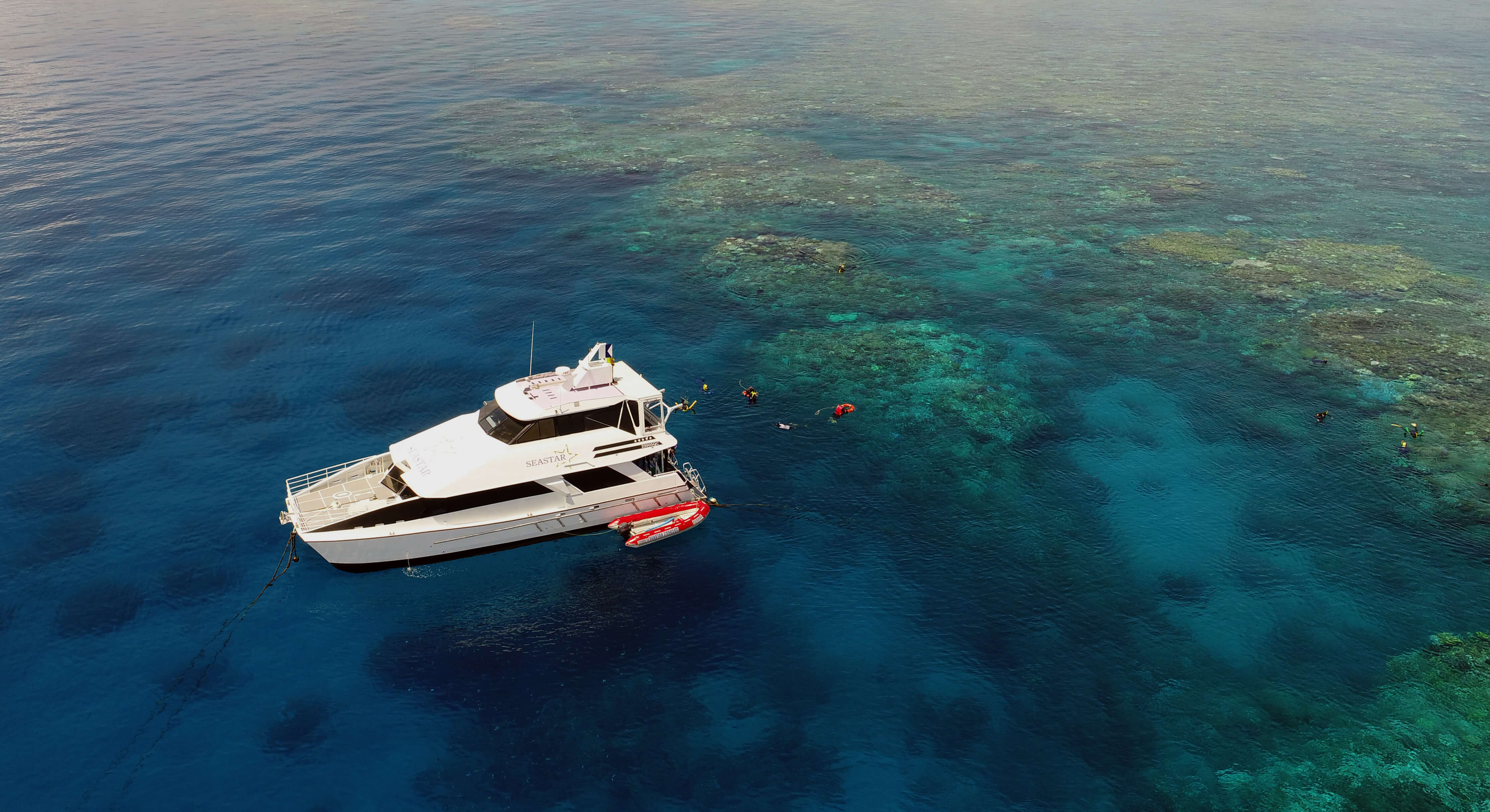
This is the classic reef day and what most people mean by "a reef tour". You leave the Reef Fleet Terminal mid-morning, cross 45 to 90 minutes to the outer reef, spend the middle of the day at two or three sites, and are back in Cairns late afternoon.
At $275–$330 you're on the outer reef, roughly 47 km offshore, which is where the coral and visibility justify the trip. Cheaper near-shore options exist, but they're a different experience, and the gap in coral quality is bigger than the gap in price.
What separates a $275 boat from a $330 boat usually isn't the reef. It's group size, how many sites you visit, whether lunch is a buffet or a sandwich, and how much gear is thrown in.
What's included in a Cairns reef tour price
On a full-day tour in that range, you can reasonably expect all of this in the base fare:
- Return boat travel to the outer reef and reef-site moorings
- All snorkelling gear, mask, snorkel, fins and flotation vest
- A lycra stinger suit during stinger season
- Lunch, plus morning and afternoon tea on most boats
- Guided commentary, and on many boats a marine biologist presentation
- Reef taxes and permits, on most (but not all) operators
A few operators go further, free wetsuit hire, free prescription mask hire, or even an introductory dive folded into the headline price. Those inclusions are worth more than a $20 price difference, which is exactly why comparing sticker prices alone misleads you.
Quick sanity check before you book: add up the extras you'd realistically buy (transfers, one dive, gear hire) and compare the total, not the advertised fare. A well-included $280 tour regularly beats a $240 tour once you've paid for gear, transfers and a levy.
Reef tour add-on costs: diving, transfers and gear
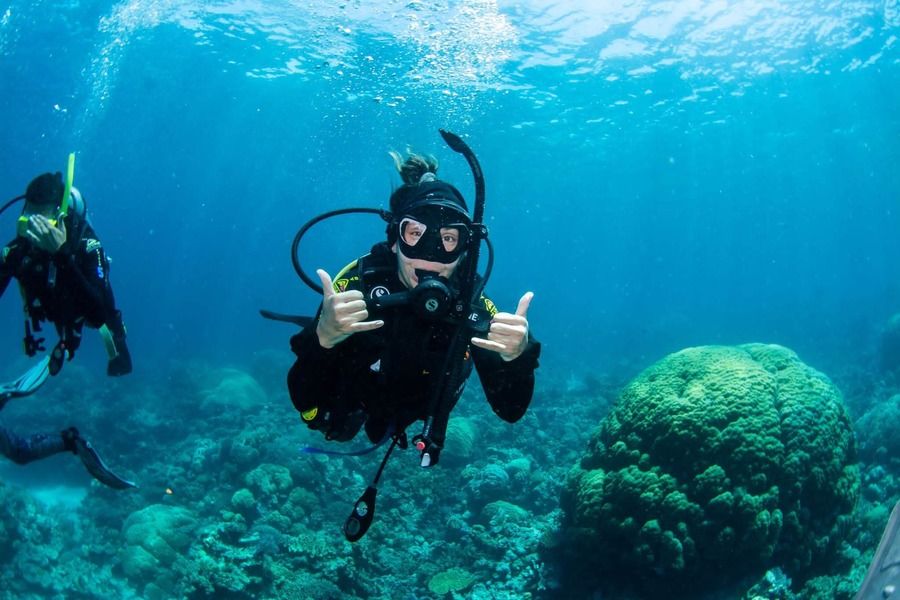
This is where a day gets more expensive than planned. None of these are hidden exactly, but they're rarely front and centre.
| Add-on | Typical cost | Worth it? |
|---|---|---|
| Introductory dive (no certification) | $90–$149 | Yes, if you've never dived and want to. One dive is plenty. |
| Certified dive | $65–$142 for 1–3 dives | Best value per dive if you're already qualified. |
| Guided snorkel tour | $65–$80 | Genuinely useful if you're a nervous snorkeller. Otherwise skip. |
| Hotel transfers | $25–$45 per person return | Cheap from the CBD; if you're walking distance, skip it. |
| Wetsuit hire | about $8 | Worth it in winter. Some operators include it free. |
| Prescription mask hire | about $15 | Yes, if you wear glasses. Some include it free. |
| Helicopter add-on | from $440 | A splurge, not a necessity. Spectacular though. |
The charges people don't expect: fuel levies and the reef tax
Two extras deserve their own mention, because they're the most common source of "I thought I'd already paid for that".
Fuel levies
Some operators quote a base fare and add a fuel levy on top, usually $4–$10 per adult and $2–$5 per child. Others build it into the advertised price and charge nothing extra. It's a small amount, but it's why two tours "both $308" can differ at checkout.
The reef Environmental Management Charge
Every visitor to the Marine Park pays an Environmental Management Charge, commonly called the reef tax. Most Cairns operators include it, around $8.50 per person, in the price you see. A few collect it at check-in instead, and on one Green Island operator it's $20 per person payable on the day. Always check whether it's in or out before comparing two fares.
The one number that matters: ask what you'll pay at the wharf, not what's advertised. That single question removes almost every unpleasant surprise on a Cairns reef day.
Not sure which reef tour fits your budget?
We've reviewed and ranked every reef tour running from Cairns, with the real fare, what's included and who each boat suits.
Compare reef tours →Cheaper ways to see the Great Barrier Reef from Cairns
If $300 a head doesn't fit the trip, you have real options, and none of them mean missing the reef.
Take a half-day trip
A half-day outer reef tour starts around $179. You get one reef site instead of three and you're back by mid-afternoon, but it's genuine outer reef with a shorter, faster crossing. For travellers on a tight schedule or budget it's the best value on the water. We've broken these down on our half-day reef tours guide.
Do an island day instead
Fitzroy Island starts near $108 and Green Island around $122. Both sit on the reef with fringing coral you can snorkel straight off the beach. The coral isn't outer-reef quality, but you get a beach, a rainforest walk and a full day out for a third of the price. Our island tours comparison covers all four islands.
Bundle two days instead of booking twice
Pairing the reef with a rainforest or Kuranda day is usually cheaper than two separate bookings. See Cairns tour packages for the combinations that save money.
Skip the add-ons, not the tour
Pick a better boat with no extras rather than a cheap boat plus $150 of add-ons. This is the single most common budgeting mistake we see.

Is a Great Barrier Reef day trip worth the money?
Honestly, yes, but only if you pick the right trip. The people who come back disappointed are almost always the ones who booked on price alone: a long crossing on a crowded boat to a mediocre site, or a near-shore trip they thought was the outer reef.
The reef is a once-in-a-lifetime thing for most visitors. Spending an extra $40 to be on a boat that suits you, with a shorter crossing and better sites, is the best money you'll spend in Cairns. Spending $150 on add-ons you didn't need is not.
How to choose a reef tour on a budget
Decide on diving before you compare prices
If you want to dive, choose a dive-focused boat where the per-dive price is lowest, rather than paying premium rates on a snorkel boat. It can swing the day's total by $80.
Count the crossing, not just the hours
A tour that's "8 hours" with a 90-minute crossing each way gives you three hours less water time than one with a 45-minute run. Time in the water is what you're buying.
Check whether transfers and levies are in
Two $280 fares aren't equal if one adds $35 transfers and a $20 levy. Always compare the wharf total.
Match the boat to your swimming confidence
Nervous in open water, or travelling with small kids or grandparents? A pontoon costs slightly more but includes a semi-submersible and observatory, which saves you paying for a guided snorkel.
Travel as a family, use the family pass
Family passes exist on most boats and beat four individual tickets, often by $100 or more.
Go in shoulder season
May and late October give you dry-season conditions with quieter boats and far more choice of departure, at the same fare.
How we know this
Prices here come from the operators' own current fares as published on their booking pages, cross-checked against the booking card on each of our tour pages. We ride these boats, and we book them for guests every week, so the add-on and levy detail comes from what people get charged at the wharf.
Where an operator hasn't published a figure, we say so rather than estimate. Ranges reflect genuine variation between boats, not guesswork.
The short version on reef tour costs
Budget $275–$330 for a proper full day on the outer reef, and add $30–$80 for the extras most people end up buying. If that's too much, a half-day trip from $179 gets you to the same outer reef, and an island day from $108 gets you reef snorkelling off a beach. What you should not do is pick the cheapest boat and then pay for gear, transfers and a guided snorkel on top. That's how a "budget" day becomes the expensive one.