The short answer
- Rain doesn't cancel much here. It cancels wind, and wind is a different problem.
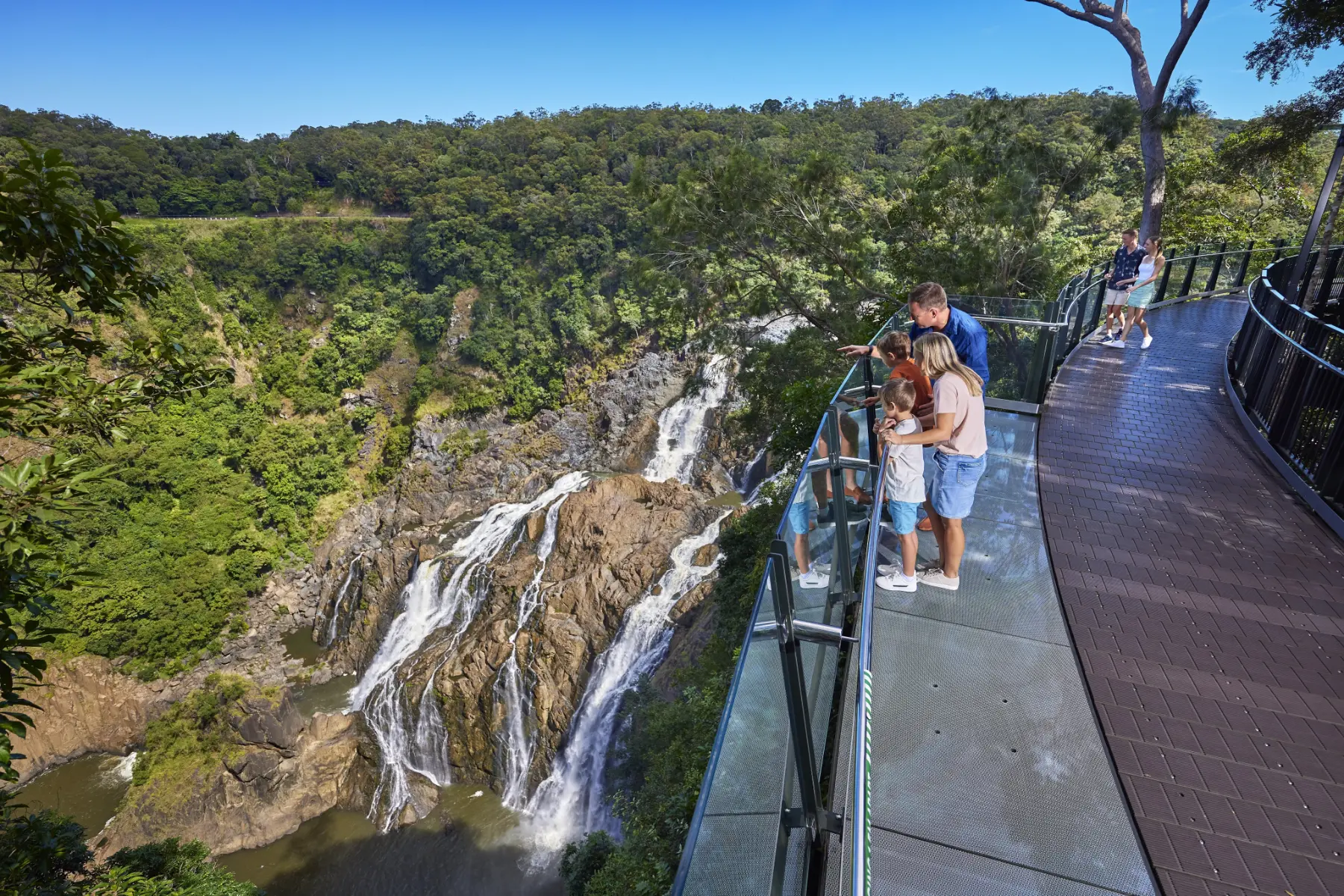
- Kuranda is the best wet-weather day: enclosed gondolas, free umbrellas, and Barron Falls at full power.
- The reef is usually still fine. You're getting wet anyway; only heavy runoff affects visibility.
- The waterfalls are better in the rain, though swimming holes close on high flow.
- February averages 437 mm across 16 rainy days, and most of it falls in short, heavy bursts.
Cairns gets a lot of rain. February averages 437.5 mm and January and March both clear 400 mm. What those numbers don't convey is the shape of it: tropical rain here arrives as a heavy afternoon or overnight burst, not as the all-day grey that the figures suggest to anyone from a temperate climate.
So a rainy day in Cairns is usually a hot bright morning, an hour of spectacular downpour, and steam coming off the road afterwards. Plan for that rather than for drizzle.
Rain is not the problem people think it is
The thing that ruins days in Cairns is wind, not rain. The south-easterly trades from June to September are what cancel reef boats, and those are dry-season winds. In the wet season, mornings are often glassy.
What rain affects:
- Reef visibility, but only after sustained heavy rain that pushes river sediment offshore. A normal wet-season shower makes no difference 50 km out.
- Swimming holes, which close on high flow. Josephine Falls' rock slide shuts when the river is up, and that's a genuine loss.
- Road conditions, particularly the Gillies Highway and the road north of the Daintree ferry.
- Your comfort, honestly. It's humid, and everything stays damp.
What rain improves: the rainforest, the waterfalls, the light, and how many other people are there.
Quick picks
What we'd move to the top of the list when the forecast turns.
- Best day in heavy rainKuranda by rail and cablewayRead the guide →
- Best rainforest in the wetThe Daintree, at its most aliveRead the guide →
- Best waterfalls in the wetThe Tablelands circuit at full flowWaterfalls guide →
On this page
The best things to do in Cairns when it rains
Kuranda by rail and Skyrail, the clear winner
Skyrail's own material describes it as suited to wet or dry weather, and it's true: the gondolas are fully enclosed and there are complimentary umbrellas at both Red Peak and Barron Falls. The train is covered. And Barron Falls, which can be a disappointing trickle in September because the river is dammed upstream, is genuinely overwhelming after heavy rain. A return Skyrail is $111.00 adult and $55.50 child; the packaged loop with the railway starts around $145. Full detail in our Kuranda guide.
The Daintree, a rainforest in the rain
It is a rainforest. Rain is the point. The boardwalks at Dubuji and Marrdja are elevated, the canopy takes most of the water, and the forest is loud and alive in a way it simply isn't in September. A guided day means someone else drives the wet road. See how to visit the Daintree.
The Tablelands waterfalls, at their best
Millaa Millaa in full flow is a different waterfall from Millaa Millaa in October. The caveat is swimming: high flow closes the safe areas, so check before you plan a swim-focused day. See waterfalls near Cairns.
A reef pontoon rather than a dive boat
If you're set on the reef in poor weather, a pontoon gives you shelter, a covered deck, a semi-submersible and an underwater observatory. You can see the reef without getting rained on, which is not an option on a moored catamaran.
Paronella Park
A 1930s garden built around a waterfall, an hour and a half south. Wet weather suits it, and the falls are better for it. Admission is $62 adult, $34 child aged 5 to 15, $182 for a family of four, and the evening light show is included rather than charged separately.
Should you still go to the reef in the rain?
Usually yes. Two reasons people get this wrong.
First, you're going to be in the water. Whether it's raining on the surface is close to irrelevant once your face is under it. Second, cloud has very little effect on underwater colour at snorkelling depth. The dramatic difference in reef photos is mostly about camera and flash, not sunshine.
What does matter is sustained heavy rain over days, which pushes sediment out from the rivers and can cut inshore visibility. The outer reef 40 to 70 km offshore is far less affected than an inshore island. So in a genuinely wet week, favour the outer reef over Green Island, and favour a pontoon over an open boat.
Operators cancel for wind and sea state, not for rain. If the boat is running, the reef is worth doing. Compare the options on our reef tour page and see how to choose a reef tour.
Genuinely indoor options
Cairns is not a museum city, so this list is short and we'd rather be honest about that than pad it.
- Cairns Aquarium: open 9:30am to 3:30pm with last admission at 2:30pm, general admission from $61, and the operator suggests about two hours. There are also turtle rehabilitation centre tours from $20, for ages 3 and up. It's a genuinely good aquarium and it's the obvious wet-weather answer with children.
- Daintree Discovery Centre: $41 adult, $19 child, $100 family, $38 concession, open 9am to 5pm with last entry at 4pm. Mostly boardwalks and a canopy tower rather than indoors, but a seven-day re-entry pass means a rained-off visit isn't wasted.
- The Night Markets and Rusty's: both undercover. Rusty's runs Friday and Saturday 5am to 4pm and Sunday 5am to 3pm.
- Wildlife parks and the Kuranda attractions: Koala Gardens, Birdworld and the Butterfly Sanctuary are largely sheltered, and they pair with a Kuranda day.
- A cinema, a spa, a long lunch: sometimes that's the correct answer, and there's no shame in it.
The one thing that transforms a wet trip: swim in the rain. The Esplanade Lagoon is open until 9pm, lifeguarded, and swimming in warm water while tropical rain comes down is genuinely one of the nicer experiences available here. It's also free.
Free and dry, or free and wet but worth it
- The Esplanade Lagoon: open in the rain, and better for it.
- The Botanic Gardens: the conservatory and the boardwalks give you some cover, and the rainforest section is at its best wet.
- Crystal Cascades: the creek runs hard after rain. Do not swim above a fall or when the water is high and brown.
- Barron Falls lookouts: free if you drive to Kuranda yourself, and the wet season is when they earn the trip.
More in our free things to do in Cairns list.
Visiting in the wet season on purpose
There's a real case for it. Accommodation is cheaper, boats are quieter, the rainforest is spectacular, and the sea is at its warmest, around 29 °C in January against about 24 °C in July.
What you accept in exchange: humidity at 69% in the afternoon in February, warm sticky nights, the cyclone window from November to April, and the possibility of losing a day. Buy travel insurance, build in a spare day, and put the reef early in the trip.
The full month-by-month numbers are in Cairns weather by month, and the recommendation version is in best time to visit Cairns.
If your tour is cancelled
It'll be wind, not rain. Operators offer a refund or a rebooking, and the rebooking is what you want, which is only possible if you have days left.
Our standing advice, and the reason we repeat it: book the reef for day one or two of your stay. Then a cancellation is an inconvenience rather than the end of the plan. If it happens, the substitutes that work are Kuranda, an island day, or the Tablelands. See the best day trips from Cairns.
Weather looking bad for your reef day?
Kuranda works in any weather, the gondolas are enclosed, and Barron Falls is at its best after rain. It's the substitution we make most often.
See the Kuranda day →How we know this
We're based in Cairns and we re-book guests around weather most weeks of the wet season, so this is the substitution list we actually use. Rainfall figures are Bureau of Meteorology long-term averages for Cairns Aero; attraction prices and hours are the operators' own published information.
Swimming holes close on high flow and roads can be affected in the wet. Follow closure signs and current advice.
Cairns in the rain: our verdict
Rain is much less of a problem here than the rainfall figures suggest, because it arrives in short heavy bursts and because wind, not rain, is what cancels tours. If it's pouring, do Kuranda: enclosed gondolas, free umbrellas, and Barron Falls at full power. If the boat is running, still go to the reef; you're getting wet anyway. And swim in the Lagoon during a downpour at least once.