The short answer
- Two seasons, not four. A dry season from May to October and a wet from November to April.
- The driest month is August: 26.5 mm of rain across about five rainy days.
- The wettest is February: 437.5 mm, with rain on 16 days.
- It never gets cold. The coolest month, July, still averages a 25.9°C day.
- The sea is swimmable all year: around 24°C in July, close to 29°C in January.
Most weather pages for Cairns give you averages without telling you what they mean on the ground. A 400 mm month here is not 400 mm of grey drizzle. It's a hot, bright day with an hour of tropical downpour in it.
The figures below come from the Bureau of Meteorology's Cairns Aero station, which has 83 years of record. Underneath each one we've put what it looks like from a boat or a boardwalk.
Cairns weather, month by month
| Month | Avg high | Avg low | Rainfall | Rain days | 3pm humidity |
|---|---|---|---|---|---|
| January | 31.5°C | 23.8°C | 404.8 mm | 15.8 | 66% |
| February | 31.3°C | 23.8°C | 437.5 mm | 16.1 | 69% |
| March | 30.7°C | 23.2°C | 422.1 mm | 16.0 | 67% |
| April | 29.4°C | 21.8°C | 201.8 mm | 14.5 | 65% |
| May | 27.7°C | 20.0°C | 92.0 mm | 10.5 | 64% |
| June | 26.1°C | 18.0°C | 45.5 mm | 7.0 | 61% |
| July | 25.9°C | 17.2°C | 33.2 mm | 5.7 | 58% |
| August | 26.7°C | 17.4°C | 26.5 mm | 4.9 | 56% |
| September | 28.2°C | 18.8°C | 34.1 mm | 4.9 | 55% |
| October | 29.7°C | 20.7°C | 47.2 mm | 5.7 | 57% |
| November | 30.8°C | 22.4°C | 87.9 mm | 7.8 | 60% |
| December | 31.5°C | 23.4°C | 193.8 mm | 10.7 | 62% |
| Year | 29.1°C | 20.9°C | 2,025.5 mm | 119.6 | 62% |
Long-term averages from the Bureau of Meteorology, Cairns Aero station 031011, 1942–2026. Rain days counts days with 1 mm or more.
Two things jump out of that table. The temperature barely moves, 5.6 °C separates the average high in July from the average high in January. And the rainfall moves enormously: February gets sixteen times as much rain as August.
So in Cairns you don't plan around temperature. You plan around water.
Quick picks
What the numbers mean for the trip you're planning.
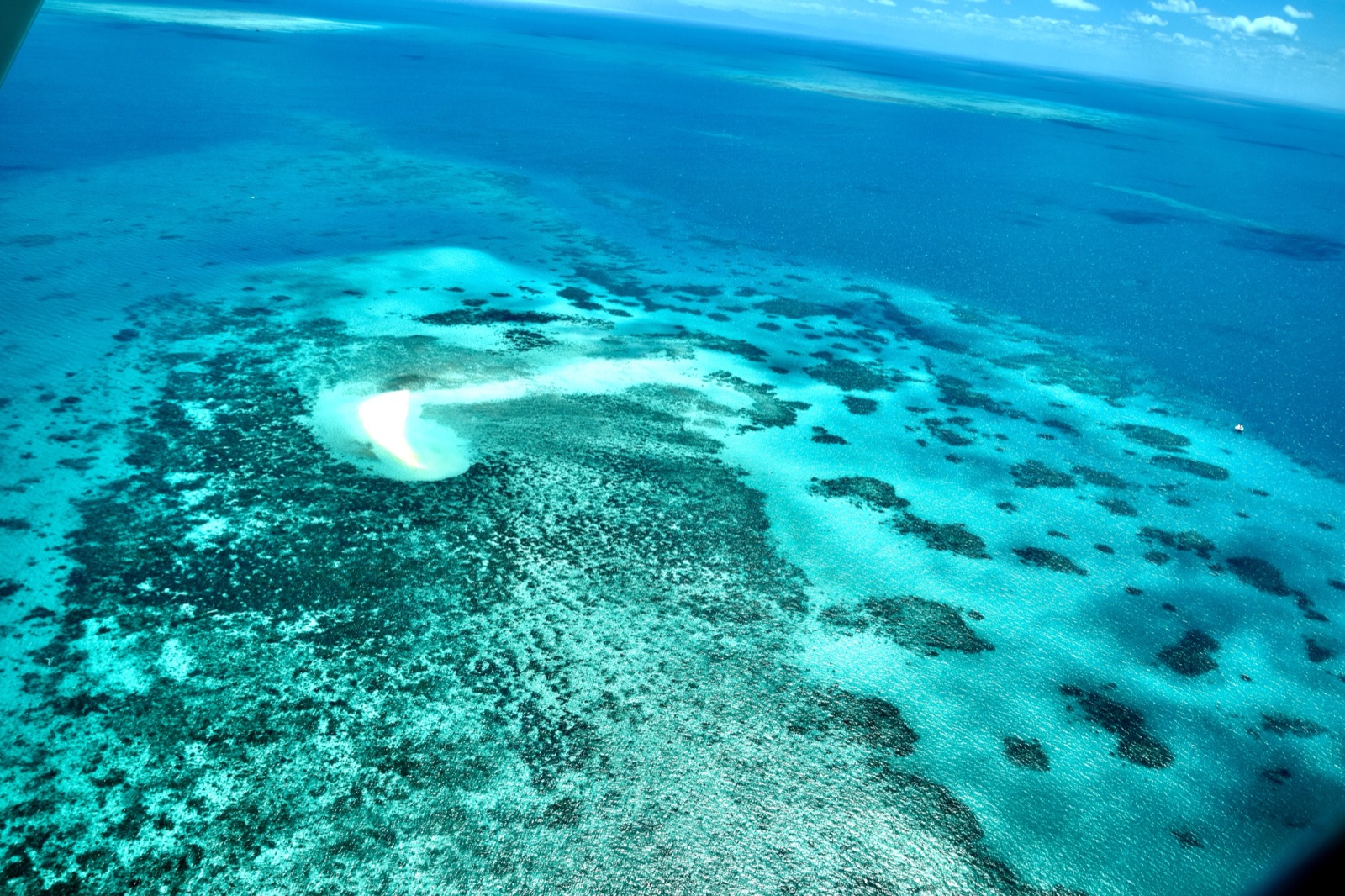
- Best all-round monthsAugust to October, dry, calm, warm seaSee reef tours →
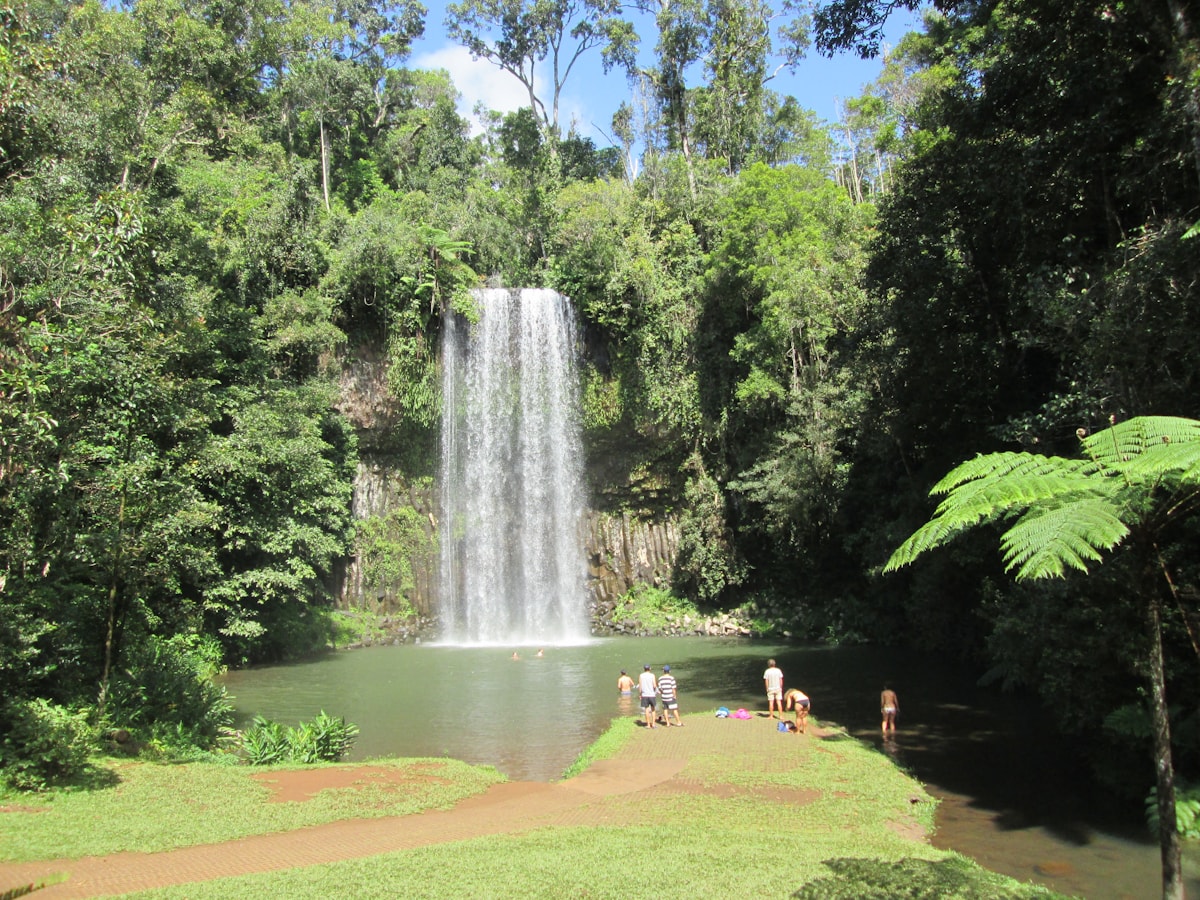
- Cheapest and greenestFebruary and March, if you accept rainSee the falls →
- Deciding which monthOur month-by-month recommendationRead the guide →
On this page
Two seasons, not four
Locals talk about the dry and the wet, and nothing else. Autumn and spring don't exist here in any meaningful sense.
The dry runs roughly May to October. Rainfall drops off a cliff after April: 92 mm in May, then 45, 33, 26, 34 and 47 mm through to October. Humidity falls to its lowest of the year in September at 55% in the afternoon. This is peak season, and the pricing reflects it.
The wet runs roughly November to April, with January, February and March carrying more than 400 mm each. December is the shoulder at 193.8 mm, which is why late November and early December are quietly one of the better-value windows in the year.
One statistic worth holding on to: August averages 4.9 days of rain. February averages 16.1. That's the whole story of the Cairns year in two numbers.
The dry season, May to October
What the numbers don't show is the wind. The dry season is driven by the south-easterly trade winds, and they're at their strongest from June to September. That has consequences:
- Reef crossings get choppy. The same 47 km to Moore Reef is a very different 90 minutes in a 25-knot south-easterly. If you're prone to seasickness, this is the season to take tablets before boarding.
- Cancellations happen. Not often, but often enough that you want a spare day. See how many days you need in Cairns.
- Visibility is excellent on the good days. Less runoff from rivers means clearer water at the reef.
- Waterfalls drop off. By September, Barron Falls can be a trickle down a very large cliff, because it's dammed upstream. Millaa Millaa still looks good.
July and August are the coolest months and the busiest, which surprises people. It's school holidays and southern winter, so the town fills up. Book the good boats early, see our reef tour comparison.
The best-kept secret of the Cairns calendar is September and October. Rain is still low (34 and 47 mm), humidity is at its annual minimum, the trade winds have eased, the sea is warming past 26 °C, and the school-holiday crowds have gone. If we were choosing a fortnight for a reef trip, it would be here.
The wet season, November to April
The wet season has a bad reputation it only half deserves. Here's the honest version.
What's genuinely worse: the humidity (69% at 3pm in February), the heat at night (an average low of 23.8 °C means sticky sleeping), the possibility of days lost to heavy rain, and the cyclone window. Reef visibility can drop after big rain because rivers push sediment out.
What's genuinely better: the rainforest. This is when the Daintree looks like the Daintree, the waterfalls are thundering, and everything is a colour of green you don't see in September. Accommodation is cheaper, boats are quieter, and mornings are often calm and beautiful before the afternoon builds.
Note the shape of the rain, too. The median figures are well below the means. February's mean is 437.5 mm but its median is 395.8 mm, and December's mean of 193.8 mm sits against a median of 130 mm. That gap tells you the averages are pulled up by a few extreme events rather than by relentless drizzle.
Stinger season overlaps the wet almost exactly, running roughly November to May. That changes what you wear, not where you go: full-body suits are supplied free on every reef boat. Our stinger season guide covers it properly.
Sea temperature, and what to wear in the water
The sea here is swimmable every day of the year. It runs to about 29 °C in January and bottoms out around 24 °C in July.
What that means practically:
- December to April: a lycra stinger suit is enough, and you'll want it for sun as much as stingers.
- May to September: 24–26 °C is warm by most standards but cool for a full day of snorkelling. Most people are happier in a wetsuit or at least a lycra suit, and operators have both.
- Any month: wear something. The reason isn't temperature, it's that you're floating face-down under a tropical sun and can't feel yourself burning.
Humidity, and why it matters more than heat
A 31 °C day at 69% humidity feels considerably worse than a 31 °C day at 56%. That's the real difference between February and August, and it's why the temperature column in that table is misleading on its own.
Afternoon humidity peaks at 69% in February and troughs at 55% in September. If heat bothers you, September and October are the two months to aim for. If you're coming in the wet, plan active things for the morning and something shaded for the afternoon, which is exactly how the tour timetables are built.
Cyclones
The Australian cyclone season runs November to April, and Far North Queensland is in it. Most years pass without a cyclone crossing near Cairns, and the ones that do are forecast days in advance.
What it means for a traveller: buy travel insurance if you're coming between November and April, and expect that operators will cancel and rebook rather than run in dangerous conditions. That's the system working. It's also an argument for not putting the reef on your last day, see the best day trips from Cairns for how to sequence a week.
How we know this
Every figure in the table above is a long-term average from the Bureau of Meteorology's Cairns Aero station, which has been recording since 1941. We've added what those numbers look like from a boat, because we're on the water most weeks and the averages don't tell you about wind.
Averages are not forecasts. Check the Bureau of Meteorology forecast for your actual dates before you pack.
Cairns weather by month: our verdict
The temperature is not the variable here, only 5.6 °C separates the average July day from the average January day. Rainfall is the variable, and it swings from 26.5 mm in August to 437.5 mm in February. For reef-first trips, aim at August to October: low rain, the lowest humidity of the year, easing trade winds and a warming sea. For rainforest and waterfalls, the wet season is genuinely better. And whenever you come, wear something in the water.